Sunday, June 26, 2011

Possible Perfume to Deter Mosquito Bites

Every time we exhale carbon dioxide, we are attracting female mosquitoes. However, there might be a new way to prevent mosquitoes from biting by overloading the nerve cell that detects carbon dioxide. According to Nature (http://dx.doi.org/10.1038/nature10081), Stephanie Lynn and Nan Li from the University of California-Riverside, have found a combination of chemicals (2,3-butanedione or diacetyl) that prevent the female mosquito from finding hosts. Diacetyl smells like butter or cheese and it causes the mosquitoes’ nerve cell to continue to fire so it can not find the source of carbon dioxide. Instead, the female flies in a random pattern.

There are several advantages of using these chemicals, such as they do not have to be applied directly to skin and the chemcials can be blown over a large area to protect many people. In addition, these chemicals do not interfere with DEET, so the two chemicals can be used at the same time. Currently, diacetyl is found in some alcoholic drinks and it is used to give margarine and popcorn a buttery flavor. However, when it is used at high levels, it can be an irritant and has been linked to a lung disease called bronchiolitis obliterans also known as “Popcorn Worker’s Lung.”

Female mosquito feeding. Photo by Texas A&M University.

Wednesday, June 1, 2011

What Is Making You Itch This Summer?

As we begin to be more active outdoors, we need to remember to protect ourselves from chiggers, which are small red mites. Chiggers develop through four lifestages: egg, larva, nymph and adult. Six-legged larvae hatch from eggs and climb up onto vegetation, so they can crawl onto a passing host. This is the only stage that feeds on humans and animals. Chigger larvae prefer to bite people in places where clothing fits tightly over the skin such as around the waistline, under socks, or where the skin is thin or creased such as around the ankles or the back of knees. Chigger larvae insert their mouthparts into a skin pore or hair follicle, and then inject a digestive fluid to dissolve skin cells. This results in itchy, reddish welts on the skin. After feeding, the larvae drop off of the host to molt into eight-legged nymphs which then molt into adults. Chigger nymphs and adults feed on eggs of springtails, isopods, and mosquitoes. Under favorable conditions, most chiggers complete their development from egg to adult in 40 to 70 days.

Suggestions for Prevention of Chigger Bites:


Avoid sitting on the ground when camping, picnicking, or working outdoors. Wear tightly woven socks, long pants, long sleeved shirts, and high shoes. Also tuck pant legs inside boots and button cuffs and collars as tightly as possible to prevent chiggers from climbing inside your clothes. Apply repellents such as DEET or permethrin to both the skin and clothing. Powdered sulfur is another repellent that can be dusted around the opening of your pants, socks, and boots or rubbed on skin such as over legs, arms and waist.

Suggestions for Relief After Exposure to Chiggers:

Wash clothes in hot, soapy water to kill chigger larvae. Take a hot bath or shower and soap repeatedly; creams or ointments such as hydrocortisone or calamine lotion can be applied to relieve itching temporarily.

Suggestions for Use of Insecticides:


Chiggers sometimes become a problem in home lawns, so chemical control may be needed. Insecticide sprays may provide some temporary reduction of chiggers and they are effective when applied in areas where chiggers and their animal hosts are living and/or traveling. Insecticides containing carbaryl, permethrin, cyfluthrin are some suggestions for control.

Photo of chigger bites. Photo by Michael Merchant, Professor and Extension Entomologist, Texas A&M University.

Wednesday, May 18, 2011

A New Use for Bee Venom

According to Discover Magazine (Reference: Daniel A. Heller, George W. Pratt, Jingqing Zhang, Nitish Nair, Adam J. Hansborough, Ardemis A. Boghossian, Nigel F. Reuel, Paul W. Barone, and Michael S. Strano. Peptide secondary structure modulates single-walled carbon nanotube fluorescence as a chaperone sensor for nitroaromatics.), a new bomb detector may come from bee venom. A team of researchers from MIT have used fluorescent carbon nanotubes and venom proteins to bind to single molecules of explosives, such as TNT. This causes the tubes to change the wavelength they emit so they change color to become detectable. Right now, the color change is only visible with a specific microscope, so is still more work that needs to be completed before commercial applications are possible.

Saturday, April 30, 2011

Female Mosquitoes Are Out for a Meal

The female mosquito consumes blood in order to develop her eggs, which causes her to be one of the biggest medical threats to humans, since she is capable of transmitting many viruses including West Nile virus, Eastern Equine Encephalitis, and Yellow Fever. Applying repellents onto our skin is very important as we begin to enjoy outdoor activities. There are many excuses for not using repellents such as it doesn't smell good, it's too expensive, but the bottom line is that repellents are needed to prevent illnesses from a feeding female mosquito.

Some Options to Prevent Mosquito Bites:
1) Repellents can be applied to the skin and clothes to prevent bites. There are many mosquito repellents on the market such as those containing DEET, picaridin, oil of eucalyptus, and soybean oil-based repellents.
2) Avoid wearing dark colors, since mosquitoes rely on visual cues to locate hosts.
3) Avoid exercising or yard work in the heat of the day, since mosquitoes are attracted to carbon dioxide and perspiration.
4) Avoid wearing fruity or floral fragrances in perfumes, hair products, or sunscreens, since these scents are more attractive to mosquitoes.
5) Wear long, loose-fitting clothing avoid mosquito bites.

Some Options For Controlling Mosquito Populations Outdoors:
1) The number one way to reduce mosquito populations is source reduction!!! Mosquitoes need as little as a bottle cap full of water, in order to complete their lifecycle. If standing water is eliminated, then the overall mosquito population in your area will be reduced.
A) Areas containing water should be changed once a week or emptied, such as wading pools, buckets, bird baths, pet dishes, ponds, boat covers, and irrigation systems.
B) Holes or depressions in trees should be filled with sand or mortar.
C) Leaky pipes should be repaired.
D) If standing water can not be drained, then mosquito dunks containing Bacillus thuringiensis israelensis (Bti) can be used to kill the mosquito larvae.
2) Mow tall grass and reduce the amount of foliage. This will reduce the number of resting sites for adult mosquitoes.
3) Insecticides can be applied to trees and shrubs, such as those containing pyrethrins, to kill adult mosquitoes when they rest.

Photo of an Asian Tiger Mosquito. Photo by Texas A&M University.

Thursday, April 21, 2011

Research on Bee Health

According to Washington State University (http://wsutoday.wsu.edu), research has been conducted on the effects of pesticide residue on honey bees. They found that low levels of pesticides build up in honey bee brood comb wax, which causes delayed larval development and a shortened adult lifespan. The pesticides involved in the study include those used by beekeepers, growers and homeowners, such as miticides, insecticides, fungicides and herbicides. The pesticide residue contamination in the brood comb may play a role in losses associated with colony collapse disorder (CCD).

Honey bee, Apis mellifera Linnaeus (Hymenoptera: Apidae), colony with queen. Photo by Bart Drees, Professor and Extension Entomologist, Texas A&M University.

Monday, March 28, 2011

May and June Beetles Emerging Soon

During the months of April and May, we begin to see the adult May and June beetles (Phyllophaga spp.) flying around lights or onto window screens, most commonly at night. The female May beetle will usually deposit eggs into the turf in April-May; where as the June beetle will usually deposit eggs in May-June. The eggs will hatch into grub worms that are creamy white in color with brown heads and are “c-shaped.” The grubs feed on dead organic matter and then move to the roots of plants. Since the grubs feed on roots, they can injure roots of grasses and other plants. This causes infested grass to brown and easily removed in large clumps.
Before treating for grub worms, lawns should be inspected to determine the presence of an infestation, which is more than 5 grubs within a square foot. In order to inspect an area, soil sections that are 3 to 4 inches deep should be taken randomly to total one square foot. One square foot of turf can be sampled by removing four, 6 inch square pieces of turf or ten, 4 inch cup cutter core samples. The optimal time for inspection and treatment should be 5-6 weeks after the most beetles are seen. This will ensure that smaller grub worms that are less than ½ inches will be found in the turf.

Some Control Options:

Non-Chemical Control Options:


Maintain healthy turf by fertilizing and watering properly.

Parasitic nematodes in the genera Steinernema and Heterorhabtitis have been shown to be effective against white grubs. They can be purchased and applied to infested areas.

Chemical Control Options:

Irrigating the soil with ¼ -½ inches of water prior to treatment can improve the effectiveness of the insecticides, since the grubs will move closer to the soil surface.
Imidacloprid, halofenozide, thiamethoxam, and clothianidin are some active ingredients found within insecticides that are often applied before extensive grub worm damage is seen, since they are effective on smaller grubs. Lambda-cyhalothrin and trichlorfon are some active ingredients within insecticides that are used when larger grub worms are present.

White grubs. Photo by Texas A&M University.

Monday, March 21, 2011

Solutions to Your Fire Ant Problems

Please join us on Thursday, April 21st from 10:00‐11:00 AM central time for a free webinar about controlling fire ants. This webinar is brought to you by The Imported Fire Ant eXtension Community of Practice. The moderator for the webinar is Dr. Kathy Flanders from Auburn University and the topics to be discussed are: How Can You Tell if You Have Fire Ants? by Dr. Jason Oliver from Tennessee State University; Understanding the Biology and Behavior of Fire Ants Makes it Easier to Control Fire Ants by Dr. Timothy Davis from Clemson University; Managing Imported Fire Ants by Dr. Bastiaan Drees from Texas A&M University and Biological Control of Fire Ants by Dr. Lawrence Graham from Auburn University. It is easy to participate; all you need to do is log in as a guest at: http://connect.extension.iastate.edu/fireant.

Photo of a fire ant mound. Photo by Bart Drees, Professor and Extension Entomologist, Texas A&M University.

Monday, February 28, 2011

Scientists Find How Density of Ants Relates to Ecosystem

Scientists at the University of Exeter found that ants have two great effects on the environment, by being both ‘ecosystem engineers' and predators. The scientists studied the impact of different combinations and densities of black garden ants (Lasius niger) and common red ants (Myrmica rubra). They found the ants affect the nutrients within the soil as they move the soil for colony construction and the ants prey on a wide range of other animals, including larger animals. These scientists found that a low population of ants within an area, increased the diversity and density of other animals, particularly herbivores and decomposers. However when the ants were at higher populations, they had no or opposite effects on the presence of other animals. This demonstrates the possibility that ant predation could cause a decrease in other animal species, which could have a negative effect on the ecosystem.

Photo of fire ants. Photo by Bart Drees, Professor and Extension Entomologist, Texas A&M University.

Wednesday, February 16, 2011

Subterranean Termite Swarming Season

For one subterranean termite genus, Reticultermes, the months of February through May means swarming season in Texas. These winged reproductive swarmers emerge from the colony in order to fly and begin a new colony. Subterranean termites are social insects that live in colonies underground, in order to avoid sunshine and outside air. Their caste system consists of workers, soldiers, and reproductives. The workers build shelter tubes from tiny pieces of soil, wood, and debris that are glued together using secretions and fecal material. These shelter tubes form an extensive tunneling system underground that allows them to carry resources back into the colony. The soldier termites protect the colony from other insect intruders and the reproductives are responsible for starting a new colony.
Termites feed on cellulose material, including roots, paper, and cardboard. They are important to our ecosystem, since they decompose cellulose; however, they become economic pests when they invade structures. Termite damage may be detected by the presence of mud tubes, damaged wood, and the swarming of winged reproductive termites.

Some Preventative Practices:
1) Any stumps, scrap wood, grade stakes, cardboard boxes, and newspapers found around structures should be removed.
2) Firewood, landscape timbers, and compost piles should not be stored around foundations of structures.
3) Minimize moist areas by grading the soil and installing gutters to allow water to drain away from the building.

Some Chemical Approaches to Termite Control:
If termites are found around structures, some measures can be taken, such as applying liquid insecticides and/or installing baiting systems. When soil insecticides are applied, they provide a continuous chemical barrier around the structure. There are both repellent and non-repellant liquid insecticides that can be applied around structures. The termites attempting to tunnel into the chemically treated area will either be killed or repelled, thus preventing them from entering the structure. Termite baiting systems can also be installed above ground and/or in the ground around structures. The bait stations usually contain a piece of untreated wood until termite activity is detected. Once termite activity is observed, then the untreated wood is replaced with a plastic tube containing an insecticide within a cellulose matrix. The worker termites feed on the cellulose matrix and then exchange it with other members of the colony. This results in death of the colony members.

Photo of termite damage. Photo by Center for Urban and Structural Entomology, Texas A&M University.

Monday, January 31, 2011

New Pest Control Book

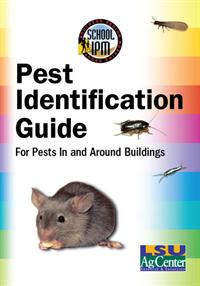
A new book titled Pest Identification Guide for Pests In and Around Buildings is a great pocket guide to help identify pests commonly found in and around structures. It contains excellent photos and information about pests, such as ants, cockroaches, rats, spiders, bed bugs, and more. The cost is $12 and it can be purchased online at http://store.lsuagcenter.com/p-85-pest-identification-guide-for-pests-in-and-around-buildings.aspx.

Saturday, January 22, 2011

Honey Bees and Toxin Filled Nectar

Scientists at Newcastle University in the United Kingdom have found that honey bees learn to avoid nectar containing plant toxins, but they will still eat the nectar when there is no other alternative available. They found that when bees are surrounded by toxic plants such as almonds or apples, they are forced to eat the toxic nectar. This may be another factor affecting colony health. Their study showed that bees that ate toxin filled nectar became sick, so they avoided the smell of the toxic flowers. By understanding how honey bees learn to detect toxins could help to breed plants that do not contain toxins, so the honey bees will be more protected.

Photo of a honey bee. Photo by the Texas A&M University Honey Bee Lab, College Station, TX.

Sunday, December 19, 2010

How Cockroaches Are Helping Farmers

Cockroaches are well known for their role as decomposers, but the Asian cockroach (Blattella asahinai) is actually helping Texas cotton farmers to reduce populations of cotton bollworms. In 2006, cotton farmers in Texas discovered these cockroaches in cotton fields. Recently, scientists found that these cockroaches eat cotton bollworm eggs, instead of the plants.
German and Asian cockroaches are almost identical. However, Asian cockroaches have longer and narrower wings and smaller egg cases. In addition, the German cockroaches live indoors, while Asian cockroaches like to burrow in mulch or compost outdoors.
Eventhough this cockroach preys on agricultural pests, scientists are hesitant to make recommendations to mass release this cockroach for the control of lepidopteran pests. Since the Asian cockroaches have been recorded to fly 120 feet in a single flight, they can easily fly into nearby residential neighborhoods. They are attracted to light-colored surfaces or brightly lit surfaces at night and they can enter into structures under doorways or window sills.

Asian Cockroach. Photo posted on USDA website: http://www.ars.usda.gov/is/ar/archive/jan08/roaches0108.htm

Friday, December 10, 2010

Tarantulas Helping People Get Over Fears

According to Reuters Life!, scientists are using tarantulas to determine how the human brain responds to fear based on the proximity, direction and preconceived assumptions of a terrifying object. Researchers from the Cognition and Brain Sciences Unit in Cambridge, England used functional magnetic resonance imaging to follow brain activity in 20 volunteers as they watched a video of a tarantula. Scientists found that different parts of the brain control different parts of the “fear network,” so when the spider moves closer, the brain changes from anxiety to panic. Their results could help scientists diagnose and treat patients who suffer from phobias.
For more information, please visit: http://www.reuters.com/article/idUSTRE6A74KI20101108

Sunday, November 21, 2010

Squash Vine Borers are Active in Gardens

Squash vine borers are the most common and can be the most damaging pests of squash. The larvae tunnel into the stems of squash and other plants, including melons and cucumbers. This causes the stems to wilt and die. The adult moths resemble a wasp, with a red abdomen surrounded with black bands at each segment; their front wings are covered with metallic brown scales and their back wings are clear with a brown band. Adult females lay eggs on the leaves and stems of primarily squash. The larvae hatch and begin burrowing into host plant stems. The larvae are white in color with a brown head and they grow to be an inch in length. The larvae will produce sawdust like frass near the base of the plant as they tunnel and then climb from the stem to pupate in the soil.

Some Control Suggestions:

Some Non-Chemical Controls:


Keep natural enemies in the garden such as parasitic wasps that will attack squash vine borer eggs and larvae. Also adult ground beetles (Family Carabidae) will attack squash vine borer larvae.
When wilting is noticed, a sharp knife can be used to cut a slit into the stem so the larva can be removed. New roots may grow along the cut stem, allowing the plant to survive. Split vines should be covered with soil immediately after the larvae have been removed.
Also remove vines soon after harvest to destroy any larvae that still might be inside the stems.

Some Chemical Controls:

Some chemical suggestions include using such active ingredients as pyrethrins, permethrin, or carbaryl. Apply the dusts or sprays to the base of the plant.

Photo of a southwestern squash vine borer, Melittia calabaza (Lepidoptera: Sessidae), larva. Photo by Bart Drees, Professor and Extension Entomologist, Texas A&M University.

Tuesday, November 9, 2010

Boxelder Bug Sightings

Boxelder trees are sometimes planted in landscapes, since they grow quickly, reaching heights of 30 to 50 feet. However, they are prone to attack by boxelder bugs. These bugs feed primarily on the female seed-bearing boxelder trees by sucking sap from the leaves, twigs and developing seeds. They will also feed on other trees such as ash, maple, plum and apple, causing scarring of fruits.
Adult boxelder bugs are ½ inches in length, brownish-black in color with three lengthwise red stripes near their heads. Under their wings, their abdomen is red. The immature boxelder bugs resemble the adults in shape, except they are smaller, wingless and bright red in color.
During the fall months, adults and immature boxelder bugs tend to congregate on the female boxelder trees and then begin migrating to a place to overwinter. Only adults overwinter by moving to hibernation sites either by crawling or flying. These bugs tend to cluster in large numbers on the sides of trees and structures, so they can easily enter structures under windows sills or through open doors or vents. If they do invade structures, their feces can stain curtains, paper and other home furnishings. Also their mouthparts can penetrate human skin, so beware when touching them.
The boxelder bugs that happen to enter indoors, will not live more than a few days indoors, do not breed inside, and are essentially harmless.


Some Options for Control:

Some Non-Chemical Control Options:
Removal of the female boxelder trees from the landscape would decrease this insect’s population.
Eliminate hiding places such as piles of boards, rocks, leaves, grass and other debris close to the house.
Caulk and close openings where boxelder bugs can enter the house such as around light fixtures, doors and windows, utility pipes and air conditioners.
Screen all windows, doors, crawl spaces, roof vents, since boxelder bugs are attracted to light and can fly in through doors and windows.

Some Chemical Control Options:
If you do not wish to remove female boxelder trees from the landscape, then the exposed immature boxelder bugs can be chemically treated in the spring and early summer. Insecticides containing the active ingredients such as neem, pyrethrin, rotenone, cyfluthrin, deltamethrin, esfenvalerate and malathion can be used. Specialized equipment may be required to treat tall trees.

Photo of boxelder bug. Photo by Elizabeth “Wizzie” Brown, Program Specialist-IPM, Texas AgriLife Extension.

Thursday, October 21, 2010

Scorpionflies Swarm Woods in North Texas

As you stroll through the woods this fall, you might notice an interesting insect called a scorpionfly, Panorpa nuptialis. This insect is found in the South Central U.S. in wooded areas, near water or in grasslands. Their bodies are around 1 inch in length with snout-like mouthparts and yellow bands on their wings. The male’s genitalia resemble a scorpion’s stinger, hence the common name. They are not strong fliers so they are easy to capture.
Adults feed mainly on dead insects but they can also feed on pollen and nectar; while the larvae feed on dead insects. Before mating, the males will emit a pheromone from their abdomen to attract females. The males will then offer the attracted female a gift. Females often select their mating partners based on this gift offering of prey.
Although scorpionflies may appear scary, especially the males, they do not sting or bite.

Photo of a scorpion fly, Panorpa nuptialis Gerst (Mecoptera: Panorpidae), female. Photo by Bart Drees, Professor and Extension Entomologist, Texas A&M University.

Monday, October 11, 2010

Can Cockroaches Be Used To Heal People?

Scientists have found that cockroaches might be a good option to fend off dangerous, drug-resistant bacterial infections. British researchers at the University of Nottingham's School of Veterinary Medicine and Science have found 9 different molecules from the tissues of cockroaches and locusts to combat bacteria like E. coli and drug-resistant staph infections (MRSA). These molecules found in the brain and nervous tissues of cockroaches are able to kill 90% of E. coli and MRSA in lab tests, without harming human cells. Since cockroaches live in unsanitary environments, they produce these molecules combat infection. Health experts are afraid that existing bacterial infections will become resistant to current modes of treatment so new ways to kill these bacteria are definitely needed. For the complete story, please visit: http://esciencenews.com/articles/2010/09/07/cockroach.brains.could.be.rich.stores.new.antibiotics

Saturday, September 25, 2010

Fall Webworms Are Likely to be Found Soon

The fall webworm, Hyphantria cunea (Drury), is usually noticed when the light gray silk webs are discovered on trees in late summer and early fall. They are considered pests of shade and ornamental trees in urban areas, by attacking more than 88 plants as they enclose leaves and small branches with their webs. Four generations occur in the south Texas, with 2 to 3 generations occurring in north Texas. The last generation in the fall is usually the most damaging.
The caterpillars build webs soon after hatching and they will remain inside the web consuming the tender parts of the leaves. If the caterpillars eat all of the leaves within the web, then new foliage will be enclosed within the webbing. These caterpillars are 1 inch in length, pale yellow or green in color, and covered with white and black tufts of long hair. The caterpillars will molt 6 or 7 times before dropping to the ground to pupate. The pupae overwinter and the adult moths emerge the following spring.

Some Control Options:

Some Non-Chemical Control Options:
1)Small webs can be removed by pruning and destroying the infested portions of branches.
2) A stick or pole can be used to snag individual webs to allow natural enemies such as yellow jackets, paper wasps and birds to eat the webworms.
3)Bacillus thuringiensis, B.t,. is effective against fall webworms if it is applied when the caterpillars are small. It is better to apply after the eggs hatch and the web is not dense.

Some Chemical Control Options:
Chemicals should be applied after eggs hatch, since they are most effective on young caterpillars. Insecticides such as those containing spinosad and tebufenozide as active ingredients can be used. Multiple applications may be needed as generations continue.

Fall webworm, Hyphantria cunea (Drury) (Lepidoptera: Arctiidae), web on pecan. Photo by Bart Drees, Professor and Extension Entomologist, Texas A&M University.

Monday, September 20, 2010

Remember to Treat for Fire Ants This Fall

Remember that the end of summer means treating for fire ants! Since the weather has been so hot this summer, we might not necessarily see the fire ant mounds in our yards. However, they are still in the area and are living deep in the soil. Since fire ants are a medically important insect pest, we need to treat this fall to decrease their populations next spring.
Before treating for fire ants, one must first survey the area to determine the number of mounds. If less than 5 mounds are present in a quarter acre plot, then it is advised to treat the individual mounds with a bait, drench or dust.
If more than 5 mounds are present, then treatment should be broadcasted over the entire area. A fire ant bait or contact insecticide may be used. Fire ant baits are comprised of defatted corn grit covered with an insecticide and soybean oil. Before broadcasting the fire ant bait, foraging activity should be evaluated by placing a potato chip or hot dog next to a mound. If fire ants find the food within fifteen minutes, then it is an appropriate time to broadcast the fire ant bait. Fire ants will typically forage when the soil surface temperature is between 70 and 90° F. Fire ant baits should never be watered into the soil and they should not be used if they smell rancid. Contact insecticides can also be broadcasted over the entire area and these need to be watered into the soil. One contact insecticide, containing the active ingredient fipronil, can be used for fire ant control and will usually provide 9 to 12 months control.
Both fire ant baits and contact insecticides can be broadcast using a hand-held spreader for small areas or a Herd Seeder can be mounted onto a truck or ATV to treat larger areas.
For more information, please visit the fire ant webpage at http://fireant.tamu.edu.

Fire ant mound in a landscape. Photo by Dr. Bart Drees, Professor and Extension Entomologist, Texas A&M University.

Sunday, August 29, 2010

Are Flies Biting You Outside?

Have you ever wandered what types of flies can bite you outside, besides a female mosquito? Well there are plenty of other biting flies, including deer flies, horse flies, stable flies, black flies, biting midges and sand flies. All biting flies locate humans and other animals by sensing things in the environment, such the carbon dioxide, dark colors, movement, warmth and perspiration. Once a host is located, a biting fly inserts its piercing mouthparts and injects its saliva with anticoagulants to keep the blood flowing. In sensitive individuals, the fly’s saliva can cause life-threatening allergic reactions. In addition, some flies can transmit disease.
Deer flies are about ¼-inches in length and are typically yellow-brown to black in color with dark bands on their wings. The larvae of deer flies are aquatic so the adult flies are usually found around streams, lakes, ponds, marshes and swamps. The adult flies have scissor-like mouthparts that cut into skin, causing blood flow which they lap up. Deer flies (Chrysops discalis) can transmit tularemia, which is a bacterial disease.
Horse flies are over 1 inch in length and black in color or light brown with shiny green eyes. They are strong, fast fliers and use their scissor-like mouthparts to cut into skin. The larvae of horse flies usually live in water or in moist locations where they prey on other insects. As the larvae grow and then pupate, they move to dryer soils.
The stable fly is ¼-inches in length, and gray in color with four dark stripes on its thorax. This fly has pointed mouthparts that it uses to suck blood, causing a sharp pain when it bites. Stable flies lay their eggs in piles of decaying vegetable matter, such as haystacks, grass clippings and manure.
Black flies are around ⅛ inches in length with broad wings and a hump-backed appearance. They prefer wet environments so they are found near ponds, creeks and rivers. Even though black flies do not transmit disease to humans in the U.S, they can threaten the lives of livestock and humans from inhalation of large swarms or by allergic reactions and blood loss from many bites.
Biting midges, also called “punkies,” and “no-see-ums,” are around 1/32 inches in length. Due to their small size, they can sometimes fly through window and door screens. The larvae of biting midges live in moist sand or soil, decaying vegetation, tree holes and near ponds, rivers, creeks or marshes so the adult flies can be pests around these waterways.
Sand flies are around ⅛ inches in length, hairy and brown to gray in color, with wings that form a “v” when at rest. The sand fly larvae live in moist, decaying vegetation, moss, mud or in water. Most feed on the blood of mammals, reptiles and amphibians. In many parts of the world, including south Texas, certain sand fly species are suspected of transmitting cutaneous leischmaniasis to humans, which is a disfiguring protozoan disease.

Ways to Prevent Bites
Repellents such as those containing DEET (N,N-diethyl-meta-toluamide) or picaridin are suggested to prevent most flies from bitings. Also avoiding wet areas inhabited by the biting flies and wearing light-colored long-sleeve shirts, long pants and hats will prevent some flies from biting.

Controlling Biting Flies:

Some Non-Chemical Controls:
Biting flies can be difficult to control due to all the moist habitats where the larvae can develop. However sanitation is always important, so all potential sites for larval development should be eliminated and decaying vegetation should be disposed of. Also, screens should be installed and maintained on windows and doors and finer mesh should be installed to keep out tiny biting flies, where these flies are a problem. Fans can also be used indoors and outdoors to keep areas free of flies, especially smaller flies that can not fly into the air currents.

Some Chemical Controls:

Ultra-low volume (ULV) treatments and sprays of non-residual pesticides can be used where flies are clustered in a small area. Residual pesticides can be used to spray surfaces where flies are resting, such as in vegetation and along the exterior walls of structures. Also applications of Bacillus thuringiensis israelensis (Bti) or insect growth regulators, such as methoprene, have been used to control some fly larvae.

A deer fly, Chrysops sp. (Diptera: Tabanidae), adult female. Photo by Bart Drees, Professor and Extension Entomologist, Texas A&M University.