Monday, March 28, 2011

May and June Beetles Emerging Soon

During the months of April and May, we begin to see the adult May and June beetles (Phyllophaga spp.) flying around lights or onto window screens, most commonly at night. The female May beetle will usually deposit eggs into the turf in April-May; where as the June beetle will usually deposit eggs in May-June. The eggs will hatch into grub worms that are creamy white in color with brown heads and are “c-shaped.” The grubs feed on dead organic matter and then move to the roots of plants. Since the grubs feed on roots, they can injure roots of grasses and other plants. This causes infested grass to brown and easily removed in large clumps.
Before treating for grub worms, lawns should be inspected to determine the presence of an infestation, which is more than 5 grubs within a square foot. In order to inspect an area, soil sections that are 3 to 4 inches deep should be taken randomly to total one square foot. One square foot of turf can be sampled by removing four, 6 inch square pieces of turf or ten, 4 inch cup cutter core samples. The optimal time for inspection and treatment should be 5-6 weeks after the most beetles are seen. This will ensure that smaller grub worms that are less than ½ inches will be found in the turf.

Some Control Options:

Non-Chemical Control Options:


Maintain healthy turf by fertilizing and watering properly.

Parasitic nematodes in the genera Steinernema and Heterorhabtitis have been shown to be effective against white grubs. They can be purchased and applied to infested areas.

Chemical Control Options:

Irrigating the soil with ¼ -½ inches of water prior to treatment can improve the effectiveness of the insecticides, since the grubs will move closer to the soil surface.
Imidacloprid, halofenozide, thiamethoxam, and clothianidin are some active ingredients found within insecticides that are often applied before extensive grub worm damage is seen, since they are effective on smaller grubs. Lambda-cyhalothrin and trichlorfon are some active ingredients within insecticides that are used when larger grub worms are present.

White grubs. Photo by Texas A&M University.

Monday, March 21, 2011

Solutions to Your Fire Ant Problems

Please join us on Thursday, April 21st from 10:00‐11:00 AM central time for a free webinar about controlling fire ants. This webinar is brought to you by The Imported Fire Ant eXtension Community of Practice. The moderator for the webinar is Dr. Kathy Flanders from Auburn University and the topics to be discussed are: How Can You Tell if You Have Fire Ants? by Dr. Jason Oliver from Tennessee State University; Understanding the Biology and Behavior of Fire Ants Makes it Easier to Control Fire Ants by Dr. Timothy Davis from Clemson University; Managing Imported Fire Ants by Dr. Bastiaan Drees from Texas A&M University and Biological Control of Fire Ants by Dr. Lawrence Graham from Auburn University. It is easy to participate; all you need to do is log in as a guest at: http://connect.extension.iastate.edu/fireant.

Photo of a fire ant mound. Photo by Bart Drees, Professor and Extension Entomologist, Texas A&M University.

Monday, February 28, 2011

Scientists Find How Density of Ants Relates to Ecosystem

Scientists at the University of Exeter found that ants have two great effects on the environment, by being both ‘ecosystem engineers' and predators. The scientists studied the impact of different combinations and densities of black garden ants (Lasius niger) and common red ants (Myrmica rubra). They found the ants affect the nutrients within the soil as they move the soil for colony construction and the ants prey on a wide range of other animals, including larger animals. These scientists found that a low population of ants within an area, increased the diversity and density of other animals, particularly herbivores and decomposers. However when the ants were at higher populations, they had no or opposite effects on the presence of other animals. This demonstrates the possibility that ant predation could cause a decrease in other animal species, which could have a negative effect on the ecosystem.

Photo of fire ants. Photo by Bart Drees, Professor and Extension Entomologist, Texas A&M University.

Wednesday, February 16, 2011

Subterranean Termite Swarming Season

For one subterranean termite genus, Reticultermes, the months of February through May means swarming season in Texas. These winged reproductive swarmers emerge from the colony in order to fly and begin a new colony. Subterranean termites are social insects that live in colonies underground, in order to avoid sunshine and outside air. Their caste system consists of workers, soldiers, and reproductives. The workers build shelter tubes from tiny pieces of soil, wood, and debris that are glued together using secretions and fecal material. These shelter tubes form an extensive tunneling system underground that allows them to carry resources back into the colony. The soldier termites protect the colony from other insect intruders and the reproductives are responsible for starting a new colony.
Termites feed on cellulose material, including roots, paper, and cardboard. They are important to our ecosystem, since they decompose cellulose; however, they become economic pests when they invade structures. Termite damage may be detected by the presence of mud tubes, damaged wood, and the swarming of winged reproductive termites.

Some Preventative Practices:
1) Any stumps, scrap wood, grade stakes, cardboard boxes, and newspapers found around structures should be removed.
2) Firewood, landscape timbers, and compost piles should not be stored around foundations of structures.
3) Minimize moist areas by grading the soil and installing gutters to allow water to drain away from the building.

Some Chemical Approaches to Termite Control:
If termites are found around structures, some measures can be taken, such as applying liquid insecticides and/or installing baiting systems. When soil insecticides are applied, they provide a continuous chemical barrier around the structure. There are both repellent and non-repellant liquid insecticides that can be applied around structures. The termites attempting to tunnel into the chemically treated area will either be killed or repelled, thus preventing them from entering the structure. Termite baiting systems can also be installed above ground and/or in the ground around structures. The bait stations usually contain a piece of untreated wood until termite activity is detected. Once termite activity is observed, then the untreated wood is replaced with a plastic tube containing an insecticide within a cellulose matrix. The worker termites feed on the cellulose matrix and then exchange it with other members of the colony. This results in death of the colony members.

Photo of termite damage. Photo by Center for Urban and Structural Entomology, Texas A&M University.

Monday, January 31, 2011

New Pest Control Book

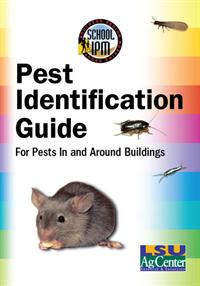
A new book titled Pest Identification Guide for Pests In and Around Buildings is a great pocket guide to help identify pests commonly found in and around structures. It contains excellent photos and information about pests, such as ants, cockroaches, rats, spiders, bed bugs, and more. The cost is $12 and it can be purchased online at http://store.lsuagcenter.com/p-85-pest-identification-guide-for-pests-in-and-around-buildings.aspx.

Saturday, January 22, 2011

Honey Bees and Toxin Filled Nectar

Scientists at Newcastle University in the United Kingdom have found that honey bees learn to avoid nectar containing plant toxins, but they will still eat the nectar when there is no other alternative available. They found that when bees are surrounded by toxic plants such as almonds or apples, they are forced to eat the toxic nectar. This may be another factor affecting colony health. Their study showed that bees that ate toxin filled nectar became sick, so they avoided the smell of the toxic flowers. By understanding how honey bees learn to detect toxins could help to breed plants that do not contain toxins, so the honey bees will be more protected.

Photo of a honey bee. Photo by the Texas A&M University Honey Bee Lab, College Station, TX.

Sunday, December 19, 2010

How Cockroaches Are Helping Farmers

Cockroaches are well known for their role as decomposers, but the Asian cockroach (Blattella asahinai) is actually helping Texas cotton farmers to reduce populations of cotton bollworms. In 2006, cotton farmers in Texas discovered these cockroaches in cotton fields. Recently, scientists found that these cockroaches eat cotton bollworm eggs, instead of the plants.
German and Asian cockroaches are almost identical. However, Asian cockroaches have longer and narrower wings and smaller egg cases. In addition, the German cockroaches live indoors, while Asian cockroaches like to burrow in mulch or compost outdoors.
Eventhough this cockroach preys on agricultural pests, scientists are hesitant to make recommendations to mass release this cockroach for the control of lepidopteran pests. Since the Asian cockroaches have been recorded to fly 120 feet in a single flight, they can easily fly into nearby residential neighborhoods. They are attracted to light-colored surfaces or brightly lit surfaces at night and they can enter into structures under doorways or window sills.

Asian Cockroach. Photo posted on USDA website: http://www.ars.usda.gov/is/ar/archive/jan08/roaches0108.htm